
Pigmentation spots are one of the most common skin concerns in Morocco, especially after summer and prolonged sun exposure. They appear as darker areas on the skin — the result of excess melanin production.
What is skin pigmentation?
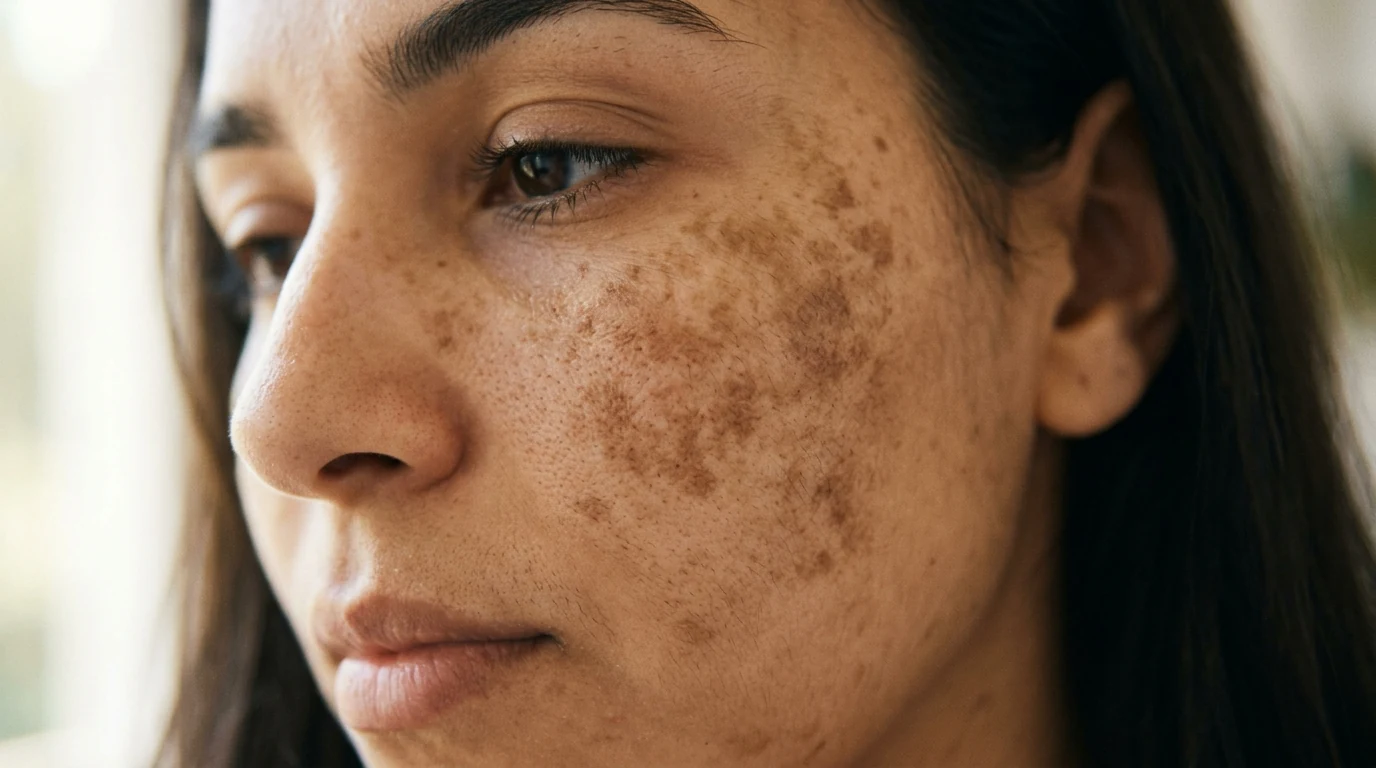
Pigmentation occurs when the skin overproduces melanin, the pigment giving skin its colour. In Morocco, the sunny climate amplifies this: UV rays trigger a defensive skin reaction, producing brown spots, melasma, and post-inflammatory hyperpigmentation. The most common types include hormonal melasma, sun spots, and post-acne marks.
Main causes of dark spots
- Sun exposure: UVA and UVB rays stimulate melanin without daily protection.
- Hormones: pregnancy, oral contraceptives, and hormonal fluctuations can trigger melasma.
- Inflammation: acne scars, eczema, or injuries often leave pigmented marks.
- Oxidative stress: a stressful lifestyle accelerates cell oxidation and worsens spots.
Recommended anti-spot routine

A targeted routine, applied morning and night, is key to fading existing spots and preventing new ones:
Morning: Gentle cleanser → Brightening serum → SPF 50+ sunscreen (non-negotiable in Morocco).
Evening: Double cleanse → Active serum (vitamin C or niacinamide) → Moisturiser.
Our Routine Tasabough was formulated specifically for this concern with clinically proven actives suited to Mediterranean skin tones.
Key active ingredients to look for
- Vitamin C: powerful antioxidant that inhibits melanin and brightens skin tone.
- Niacinamide: reduces melanin transfer to the skin surface.
- Alpha-arbutin: gentle brightening agent, ideal for sensitive skin.
- AHAs: gentle exfoliation that renews skin cells and smooths texture.
For UV protection guidelines, consult the World Health Organization.
Common mistakes to avoid
Many people unknowingly worsen their spots by using aggressive lightening products containing mercury or unprescribed steroids, sun exposure without protection after active treatments, or picking at acne scars. Patience is essential — visible results typically require 8–12 weeks of consistent treatment. Start your journey today with our Routine Tasabough.
Brightening actives compared by concentration
| Active | Effective concentration | Target spot type | Visible delay |
|---|---|---|---|
| Stabilized vitamin C | 10 to 15 % | Sun spots, dull complexion | 4 to 8 weeks |
| Niacinamide | 4 to 5 % | Post-acne marks | 6 to 8 weeks |
| Alpha-arbutin | 1 to 2 % | Melasma, sensitive skin | 8 to 12 weeks |
| Azelaic acid | 10 % | Acne + residual marks | 6 to 10 weeks |
| AHA (glycolic acid) | 5 to 10 % | Dull surface, micro-cysts | 3 to 4 weeks |
No single active treats every spot the same way: melasma — diffuse "butterfly wings" patches on the cheeks — responds better to alpha-arbutin and azelaic acid, gentle and anti-inflammatory. Clean sun spots react faster to vitamin C and AHAs, which renew the surface. That is why a serious anti-spot routine always combines two actives — one in the morning (antioxidant), one at night (renewal) — instead of a single overloaded "miracle" product.
The selection guide: matching the treatment to the spot type
- Clean, well-defined brown sun spot: vitamin C in the morning + AHA two nights a week.
- Red or brown marks after a pimple: niacinamide at night, nothing exfoliating the first week.
- Diffuse symmetrical melasma: alpha-arbutin or azelaic acid, and uncompromising SPF 50+ — without protection, everything cancels out at the first exposure.
- Reactive skin: one active at a time, introduced gradually; patience replaces concentration.
- For all of them: photograph the spot every 15 days in the same light — fading is slow, the picture makes progress objective.
The base protocol: the vitamin C serum in the morning, niacinamide at night, and SPF 50 as the backbone of the whole program. The complete anti-spot routine brings these actives together with the sunscreen — the spots + protection duo is what produces lasting results, not one without the other.
Why spots come back every summer — and how to block the cycle
A faded spot is not a removed one: the melanocytes that produced it stay activated in the deep layer. From the first April exposu res — even without sunburn — they resume melanin production. That is why the protocol runs in two phases: fading from October to March (brightening actives, SPF kept all along), then maintenance from April to September (vitamin C + strict SPF50+, strong exfoliants paused). Women whose spots "come back every summer" are the ones who stop everything once the result shows.
Two tools prevent the reset: the twice-monthly photograph (progress is read on the image, not the memory), and a shorter maintenance routine — vitamin C in the morning, moisturizer, SPF, exfoliating actives only again in autumn. The vitamin C serum is the ideal maintenance active: it protects against melanin overproduction while staying tolerable long-term, and the anti-spot pack covers the fading phase when autumn returns.