
Vitamin C serum has become a staple in Moroccan skincare routines. Our intense sun exposure, combined with urban pollution in cities like Casablanca and Marrakech, accelerates the appearance of dark spots and dullness. Vitamin C is one of the few molecules with antioxidant and brightening efficacy validated by hundreds of clinical studies.
Why Vitamin C is the hero ingredient for Moroccan skin
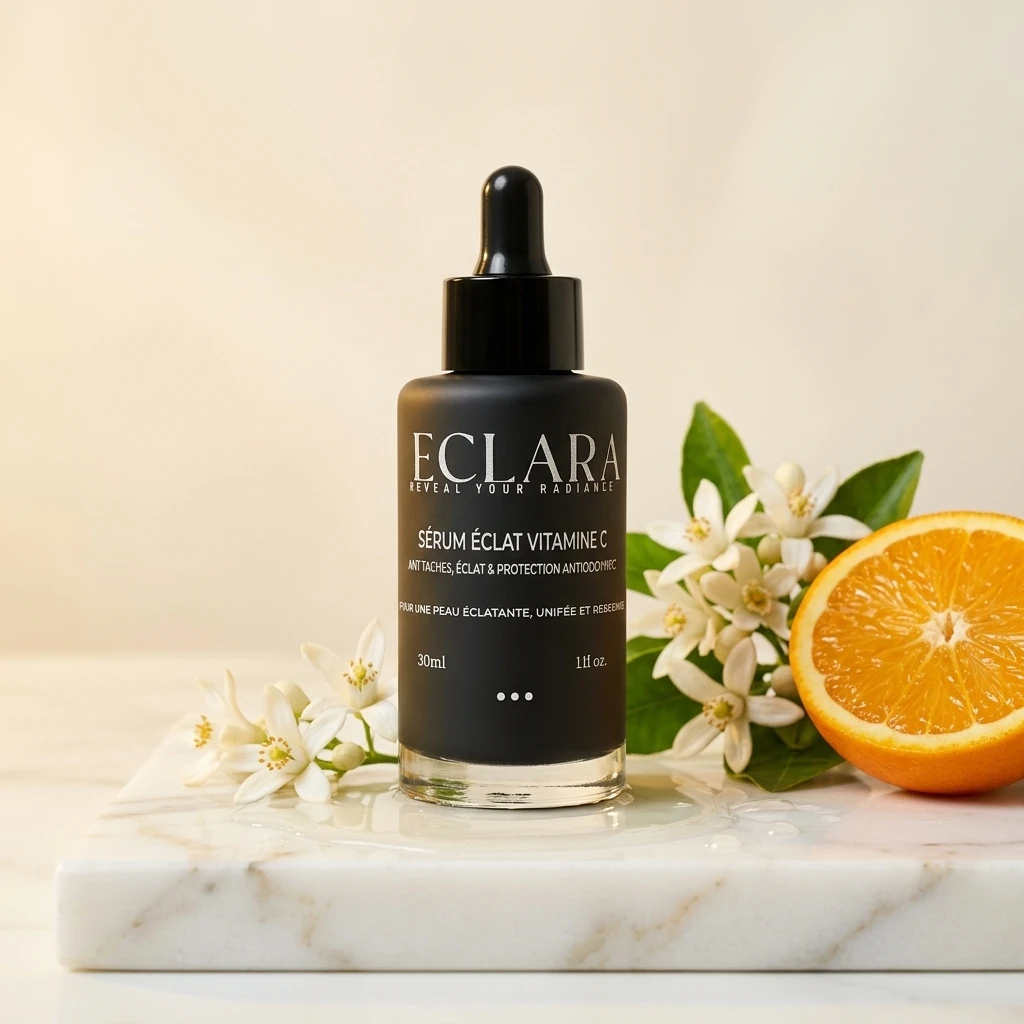
Moroccan skin, often phototype III to V, is particularly prone to post-inflammatory hyperpigmentation — dark spots that linger after a blemish, irritation, or cut. Vitamin C works on two levels: it inhibits tyrosinase (the enzyme responsible for melanin production) and neutralises free radicals generated by UV rays. Result: a more even, radiant complexion with improved texture within weeks.
How to choose a genuinely effective vitamin C serum
Not all vitamin C serums are equal. The most potent form is pure L-ascorbic acid, but it is unstable and oxidises quickly (dark yellow or brown colour signals degradation). Stabilised derivatives like ascorbyl glucoside are more stable and better tolerated by sensitive skin. Check that the serum is packaged in an opaque or tinted glass bottle — light accelerates oxidation. Eclara's Vitamin C Éclat Serum uses a stabilised formula designed to resist Morocco's high temperatures.
Integrating vitamin C into your daily routine
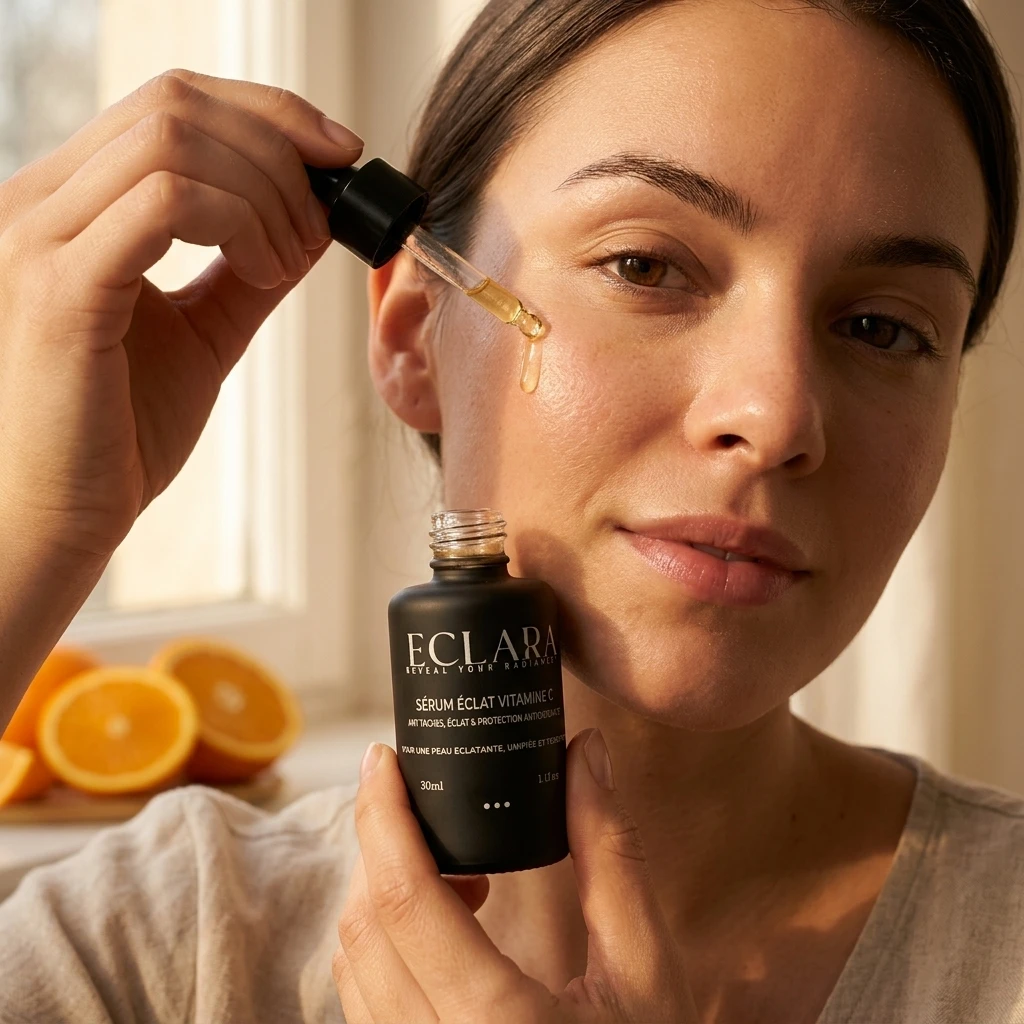
Apply vitamin C in the morning, after cleansing and before moisturiser:
- Cleanse your face
- Apply serum on slightly damp skin (improves penetration)
- Wait 2-3 minutes
- Moisturiser
- SPF50 sunscreen — non-negotiable
If you also use a Miracle Serum with niacinamide, apply it in the evening to avoid any potential interaction.
Mistakes that cancel vitamin C's effects
First mistake: skipping SPF. Second: storing your serum in the bathroom (heat and humidity = rapid oxidation). Third: expecting results in 3 days. Vitamin C works long-term — allow 4 to 8 weeks for a noticeable difference on dark spots.
Expected results week by week
Weeks 1-2: skin appears more luminous and even-toned. Weeks 3-4: new post-inflammatory spots fade faster. Weeks 6-8: older spots visibly lighten. Month 3+: progressive porcelain-skin effect. Consistency is everything — daily application beats twice a week every time.
Forms of Vitamin C compared by concentration
| Form | Effective concentration | Stability | Best for |
|---|---|---|---|
| Pure L-ascorbic acid | 10 to 20 % | Low (oxidizes in 1 to 3 months) | Normal to oily skin, faster results |
| Ascorbyl glucoside | 2 to 5 % | Excellent (heat resistant) | Sensitive skin, hot climates, beginners |
| Tetrahexyldecyl ascorbate (THD) | 5 to 10 % | Very good (oil-soluble) | Dry or reactive skin |
| Ethyl ascorbic acid | 3 to 10 % | Good | Combination skin balancing results and tolerance |
Above 20 % pure L-ascorbic acid, no study shows added benefit — only more irritation. Below 8 %, measurable antioxidant activity becomes marginal. Stabilized formulas often pair vitamin C with vitamin E and ferulic acid: this synergy multiplies antioxidant activity fourfold and extends shelf life after opening.
The buying method: 5 things to check before paying
- pH: for pure L-ascorbic acid it must be 3.5 or lower — that is what guarantees skin penetration. A serum that never states its pH is a red flag.
- Packaging: amber or opaque glass, air pump preferred. Each opening oxidizes the product.
- Color: a pale straw yellow is normal; dark orange or brown means oxidation — stop using it.
- INCI list: vitamin C should appear within the first 5 ingredients. "Glow formulas" listing it last contain cosmetic doses.
- Manufacturing date: prefer brands that print it, and plan to finish the bottle within 3 months of opening.
The Vitamin C Serum product page states the exact form, concentration and pH — a transparency worth comparing before buying from any brand. In summer, always pair it with SPF 50: vitamin C does not replace sunscreen, it amplifies it. For a complete anti-dark-spot ritual, the full glow routine bundles the steps in the right order.
A typical week with vitamin C
Monday to Friday, the morning sequence is identical: cleanse, three drops of vitamin C serum spread over forehead, cheeks and chin, two minutes of pause during breakfast, moisturizer, SPF. No need for a double layer — consistency beats quantity. On weekends, keep the same sequence if you go out; if you stay indoors in the afternoon, vitamin C alone suffices, though sunscreen remains advisable because of UVA passing through windows. One missed day breaks nothing — it is three missed days repeated every week that stalls results.
To go further on the photoprotection that completes this serum, read our full guide on daily sunscreen in Morocco — the two articles build on each other. And if your spots are already established, our article on dark spots and pigmentation details more targeted protocols.
One last pairing rule: do not layer vitamin C with retinol or strong acids at the same moment — alternate them, vitamin C in the morning and retinoids at night, so each active works at full strength without irritation. If your skin is sensitive, start at 10 % every other morning and build up frequency as tolerance develops.
Source: National Institutes of Health — vitamin C skin study