
Dry skin lacks the natural lipids needed to retain moisture, leading to tightness, roughness, and sometimes irritation. In Morocco, the arid climate of certain regions amplifies this problem. The good news: the right routine makes a noticeable difference within weeks.
Dry skin vs. dehydrated skin: what's the difference?
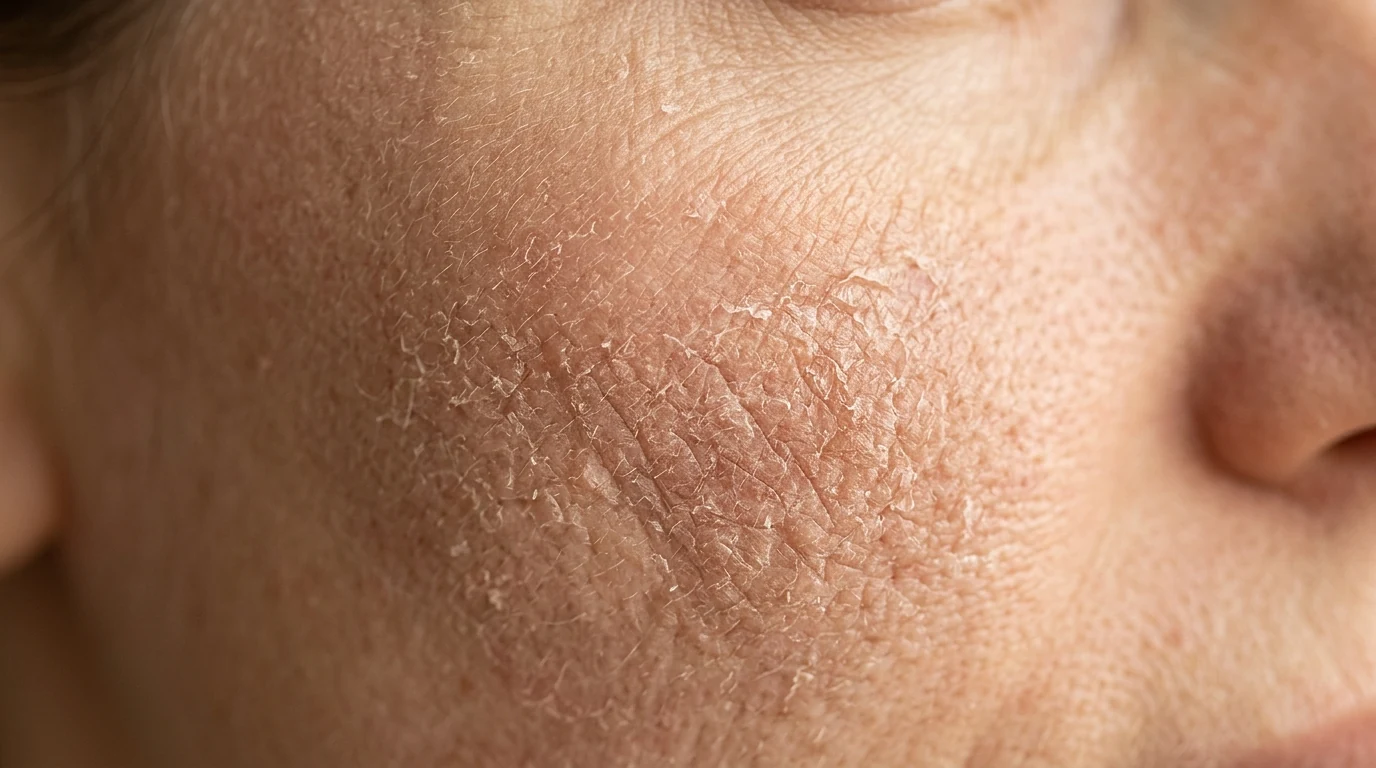
Dry skin is a skin type — sebaceous glands produce little natural oil. Dehydration is a temporary condition affecting any skin type, caused by external factors like wind, heating, or harsh products. Both respond well to a targeted routine.
Causes of dry skin in Morocco
- Dry climate: cities like Marrakech and Ouarzazate have very low humidity, especially in summer.
- Hot water: long hot showers strip the skin's protective lipids.
- Harsh cleansers: they disrupt the skin barrier and accelerate moisture loss.
- Skipping post-cleanse moisturising: skin needs to be hydrated immediately while still damp.
The ideal dry skin routine
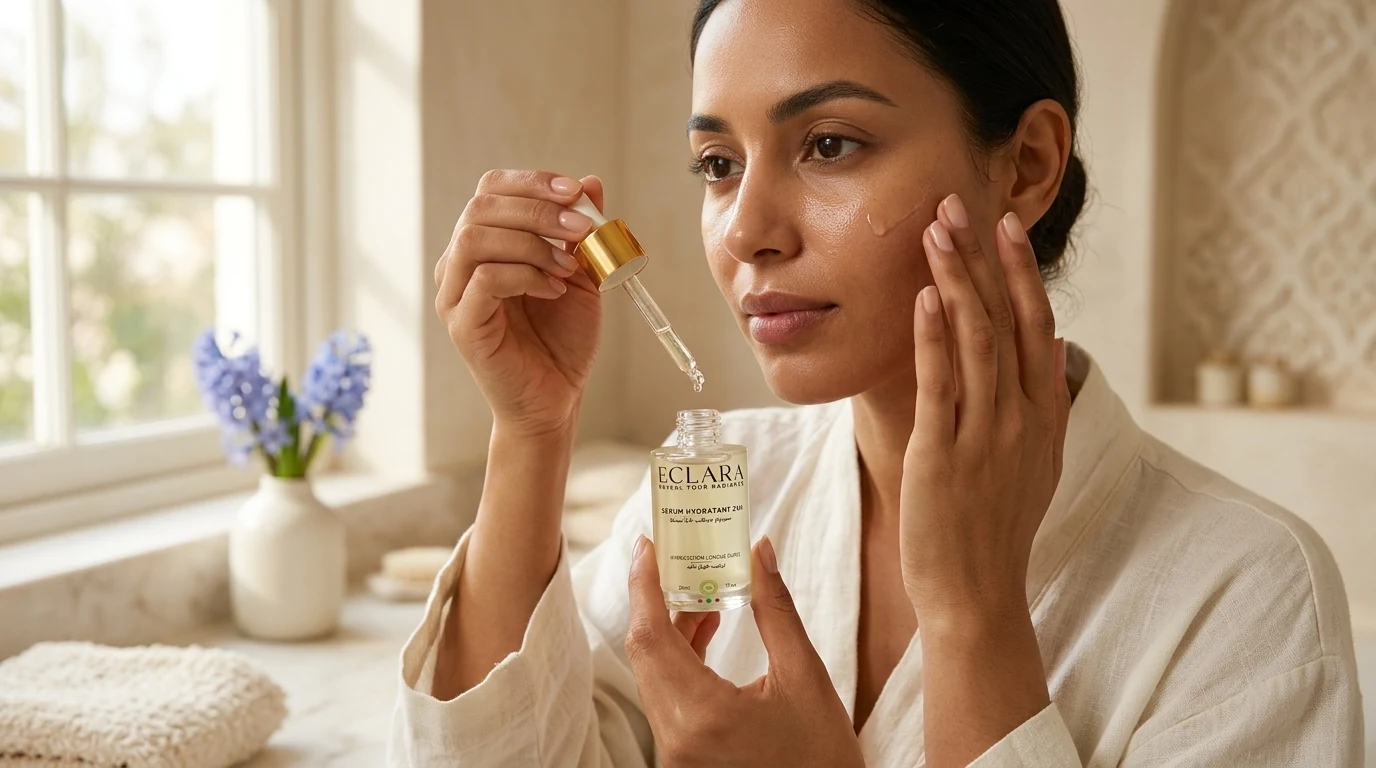
Morning: Creamy cleanser → Hydrating toner → Deep Hydration Serum → Rich moisturiser → SPF.
Evening: Oil cleanser → Gentle cleanser → Hyaluronic acid serum → Nourishing night cream.
The "lightest to heaviest" layering method ensures each product penetrates correctly before applying the next.
Key ingredients for dry skin
- Hyaluronic acid: attracts and retains water in the deeper layers of the skin.
- Glycerin: light, effective humectant for all skin types.
- Ceramides: rebuild the skin barrier and reduce trans-epidermal water loss.
- Shea butter: rich natural emollient that soothes irritated dry skin.
For more information, consult the MedlinePlus — U.S. National Library of Medicine dry skin guidelines.
Additional tips to protect your skin
Drink at least 1.5 L of water daily and include omega-3-rich foods in your diet. Use a humidifier in air-conditioned rooms and keep showers under 10 minutes at lukewarm temperature. Our Deep Hydration Serum is the cornerstone of any anti-dryness routine.
Hydrating actives compared by concentration
| Active | Effective concentration | Role | Position in routine |
|---|---|---|---|
| Hyaluronic acid | 0.5 to 2 % | Attracts and holds water | Serum, on damp skin |
| Glycerin | 5 to 10 % | Universal humectant | Serum and cream |
| Ceramides | 1 to 3 % | Barrier rebuilding | Cream, morning and night |
| Squalane | 2 to 10 % | Light lipid layer | Oil serum or rich cream |
| Shea butter | 5 to 15 % | Nourishing occlusive | Night cream, very dry zones |
The most common mistake: applying hyaluronic acid serum on dry skin. It then pulls water from deeper skin layers toward the surface — where it evaporates, leaving the skin tighter than before. The rule: serum on damp skin, then a cream that locks it in. Three minutes of difference in your routine change the final result.
How to choose: the anti-dryness buying guide
- Serum: look for multi-molecular-weight hyaluronic acid — low weight penetrates, high weight hydrates the surface. A single type hydrates only one layer.
- Day cream: ceramides or glycerin within the first 5 ingredients, texture "rich but not sticky".
- Night cream: the presence of an occlusive (shea, squalane, wax) — sleep is when the skin rebuilds its barrier.
- Avoid: stripping soaps, pure-alcohol toners and frequent scrubs — they erase each day the work done at night.
- Expected pace: comfort back in 3 to 5 days, flaking gone in 2 weeks, skin texture changed after one month.
The base duo: the hyaluronic acid serum for water, the deep hydration shield as the cream. In very dry climates (Marrakech, the south), the hydration duo or the complete dry-skin routine add the gentle cleanser and the night occlusive — the two pieces dry-skinned users most often forget.
Seasons and climate: adapting the routine
Winter (Casablanca, Rabat): air humidity is higher but wind and indoor heating dry the surface layer — switch to the rich night cream from November onward. Summer (Marrakech, Ouarzazate): air conditioning, paradoxically, dries more than the outdoors; keep the hyaluronic serum all year and reinforce the night occlusive during AC season and the July heat. The rule valid everywhere: it is not the season that matters, it is the gap between dry indoor air and outdoor air — every brutal change (travel, moving house, Ramadan reshaping sleep hours) asks for 10 days of routine adaptation.
Two free reflexes to add today: pat the face dry (never rub), and apply the cream within 60 seconds of washing — the window where water is still in the skin. The dry-skin pack and the hydration duo are built around these two reflexes, each step designed to lock in the water of the previous one.
Cleansing mistakes that undo hydration
Dry skin rarely suffers from not moisturizing alone; it suffers from cleansing that strips first. Three errors come up constantly. Hot water: it dissolves the lipid layer faster than any detergent — lukewarm only, skin should never feel tight after rinsing. Foaming sulfate cleansers used twice a day: one thorough cleanse in the evening is enough, mornings need only a splash of lukewarm water or a cotton pad with hydrating toner. And Towel rubbing: press and pat, do not drag. Fix these three free habits before buying any new product — most "moisturizer stopped working" cases turn out to be a cleanser problem in disguise, and no cream can outpace a barrier washed away every morning and night.