
Contrary to popular belief, acne is not just a teenage problem. In Morocco, many women continue to suffer from breakouts well into their 30s and 40s. Stress, diet, and hormonal imbalances all play a role — but effective, natural solutions exist.
Why does acne persist into adulthood?
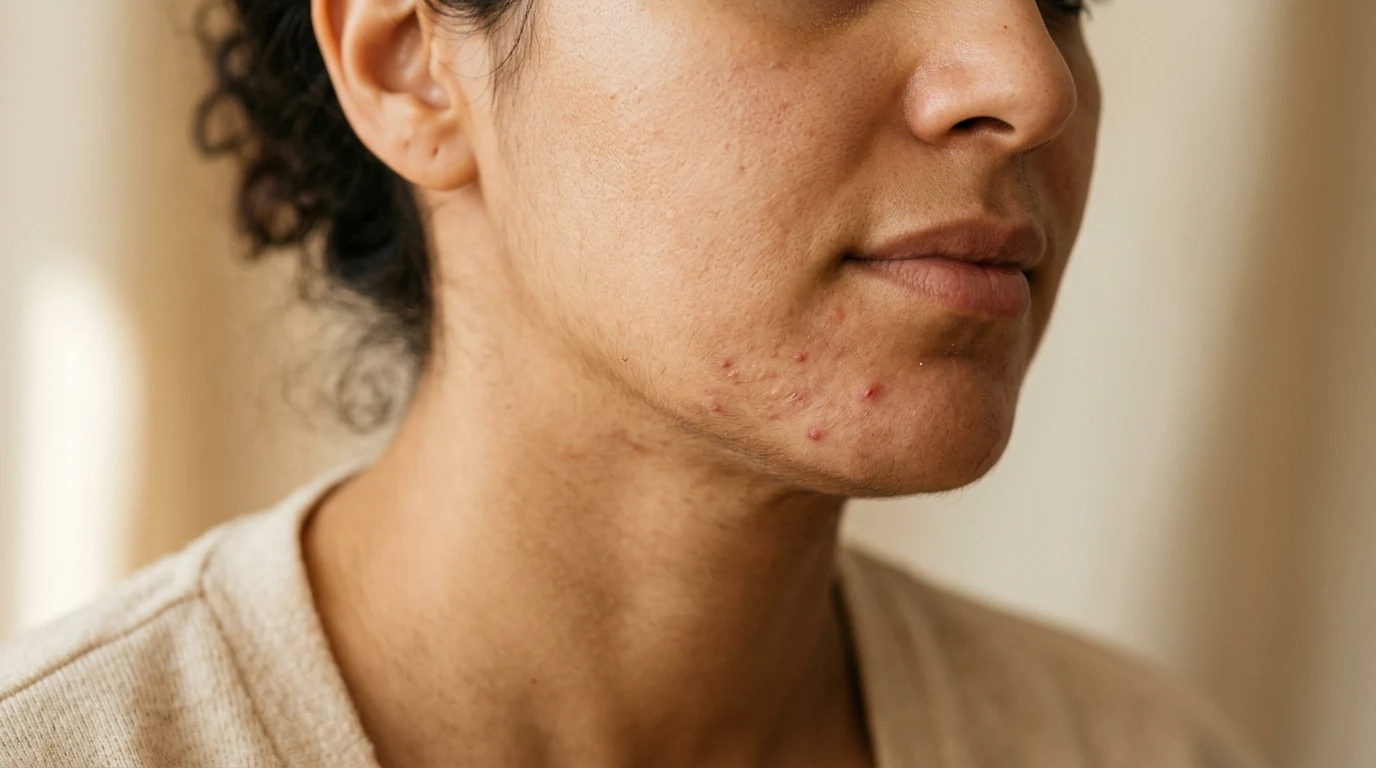
Adult acne differs from teenage acne. It typically appears on the lower face, chin, and jaw — areas most sensitive to hormones. The most common causes are:
- Hormonal imbalances: cyclical androgen fluctuations stimulate sebaceous glands to overproduce sebum.
- Chronic stress: raises cortisol levels, which triggers inflammation and increases oil production.
- Inappropriate products: using comedogenic formulas clogs pores and worsens breakouts.
- Diet: excess refined sugars and dairy products can exacerbate acne in some individuals.
The natural anti-acne routine
An effective routine rests on three pillars: thorough cleansing, targeted treatment, and non-comedogenic hydration.
Morning: Gentle gel cleanser → Salicylic acid toner → Lightweight oil-free moisturiser → Non-greasy SPF.
Evening: Thorough cleanse → Retinol or niacinamide serum → Lightweight moisturiser.
Our Routine Nadara was designed to treat breakouts and post-acne marks while preserving skin balance, without drying it out.
Key actives to fight acne
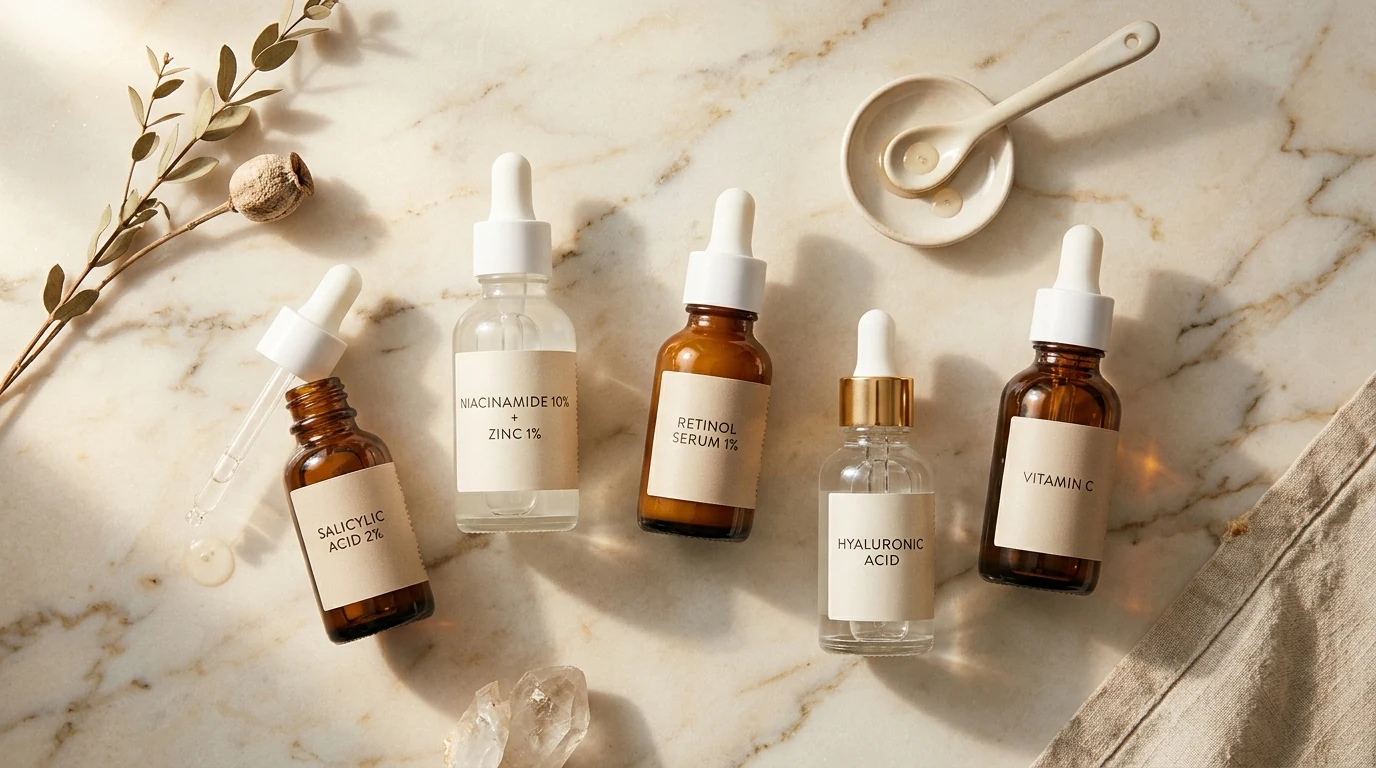
- Salicylic acid: dissolves sebum inside pores and reduces redness.
- Niacinamide: regulates sebum production and fades post-acne marks.
- Retinol: renews skin cells and prevents pore blockage long-term.
- Zinc: natural anti-inflammatory that reduces active breakouts and redness.
For medical recommendations on adult acne, consult the National Institutes of Health — adult acne in women.
What to absolutely avoid
Never pop your spots: it worsens inflammation and leaves permanent scars. Avoid over-drying the skin — dehydrated skin compensates by producing more oil. Don't change products too frequently; give each routine at least 4 weeks to show results. Start with our Routine Nadara, specially formulated for acne-prone skin.
Anti-acne actives compared by concentration
| Active | Effective concentration | Acne type | Precaution |
|---|---|---|---|
| Salicylic acid (BHA) | 0.5 to 2 % | Pimples, blackheads, clogged pores | Start 2 nights a week |
| Niacinamide | 4 to 10 % | Sebum, post-acne marks | Combines with everything |
| Retinol | 0.05 to 0.3 % | Recurring acne + marks | Slow build-up, SPF mandatory |
| Azelaic acid | 10 % | Acne + pigmentation marks | Tolerated by sensitive skin |
| Clay + Zinc | mask 1x/week | Oily T-zone | Never on dry pimples |
The golden rule: one strong active at a time. Stacking salicylic acid + retinol + AHA on the same night is the fastest route to a damaged skin barrier — and a damaged barrier produces more inflammation, therefore more breakouts. Alternate: AHA/BHA one night, retinoid another night, niacinamide either night (it regulates sebum without exfoliating).
How to build your anti-acne routine: the selection guide
- Assess your acne type: frequent superficial pimples = BHA first; deep, cyclical breakouts = talk to a dermatologist — cosmetic actives then work better on top.
- Start low and slow: a 0.5 % BHA two nights a week for 3 weeks before increasing. Purging (a small wave of breakouts around week 2) is normal and temporary.
- Moisturize anyway: acne-prone skin still needs hydration; light oil-free formulas protect the barrier and reduce redness.
- Give it 6 to 8 weeks: that is a full skin renewal cycle. Switching products every two weeks hides what actually works.
- Photograph your skin: same light, same angle, every 15 days — the daily mirror lies about progress.
The base routine fits in three products: the gentle cleansing gel morning and night, the niacinamide serum to regulate sebum, and a gentle BHA exfoliation introduced gradually. For a full protocol — cleanser, serum, non-comedogenic hydration — the complete routine gathers the essentials in the right order.
The food and stress file
The study linking diet to acne most consistently concerns dairy (skim milk, counter-intuitively) and high-glycemic carbohydrates: white bread, sweets, sodas. No total-ban diet — but three weeks of reduction, while watching the skin, costs little and says a lot. Skin takes 4 to 6 weeks to react to what you ate today: the twice-monthly photos mentioned above apply to nutrition too.
On stress, the mechanism is direct: cortisol raises sebum production and inflammation simultaneously. Hence exam flare-ups, end-of-month spikes or overwork periods. The cosmetic answer (steady routine + gentle actives) does not cancel the source, it limits the damage — 7 hours of sleep and a 20-minute daily walk help the jaw zone more than any serum. Our niacinamide serum remains the active of choice in stressful periods because it calms redness without aggressing.
When to see a dermatologist
Natural and cosmetic routines have real limits. Book a dermatologist consultation if nodules or deep cysts keep forming — they scar, and scars are far harder to treat than the acne that caused them. Same if the routine shows no change after ten to twelve weeks of strict consistency, if the skin reacts with persistent redness and peeling, or if adult acne appears suddenly after years of clear skin, which can point to a hormonal cause worth investigating. A dermatologist visit does not invalidate the daily routine: retinoids, benzoyl peroxide and azelaic acid remain the medical standard, and the gentle base — cleanser, moisturizer, SPF — is exactly what makes prescriptions tolerate well.