
Niacinamide — or vitamin B3 — has become one of the most praised cosmetic ingredients by dermatologists in recent years. Its strength: it addresses multiple common skin concerns simultaneously while being exceptionally well-tolerated, even by the most reactive skin. For Moroccan skin, exposed to heat, sun and chronic hyperpigmentation, it's a first-choice ingredient.
Niacinamide: the ingredient every dermatologist recommends
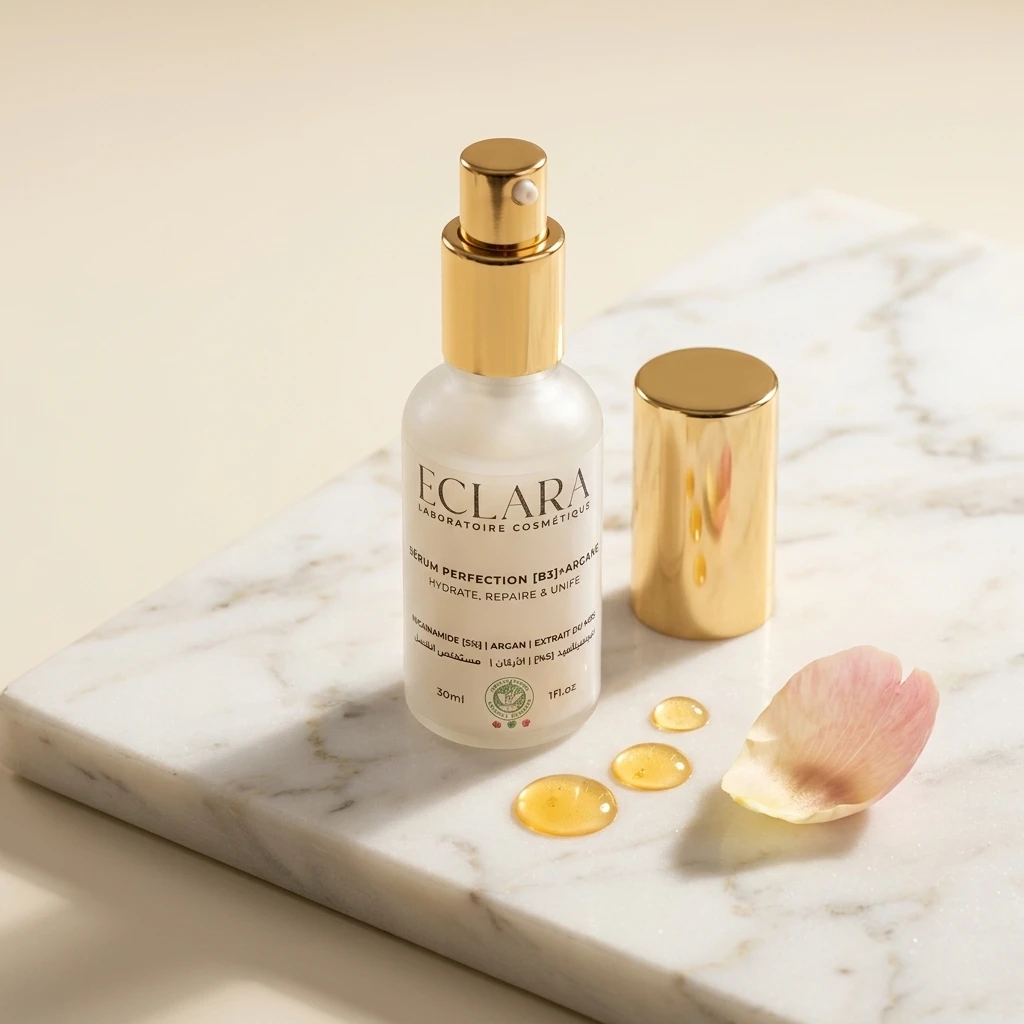
Vitamin B3 plays an essential role in skin cell function. Topically, it strengthens the skin barrier (by stimulating ceramide production), regulates sebum, reduces inflammation and inhibits melanin transfer to the skin surface. This last mechanism makes it an effective anti-spot ingredient without the irritating effects of more aggressive depigmenting actives like hydroquinone.
5 skin problems niacinamide solves
- Enlarged pores: niacinamide tightens the appearance of pores by regulating sebum
- Dark spots and hyperpigmentation: inhibits melanin transfer, evens skin tone
- Blemishes and inflammation: well-established anti-inflammatory properties
- Dull complexion: improves texture and increases overall luminosity
- Fine lines: stimulates collagen production over the long term
Eclara's Miracle Éclat Serum concentrates niacinamide at an effective dose, ideal for Moroccan combination to oily skin. For reinforced anti-spot action, pair it with the Triple Action Anti-Spot Serum.
How to combine niacinamide with your other skincare
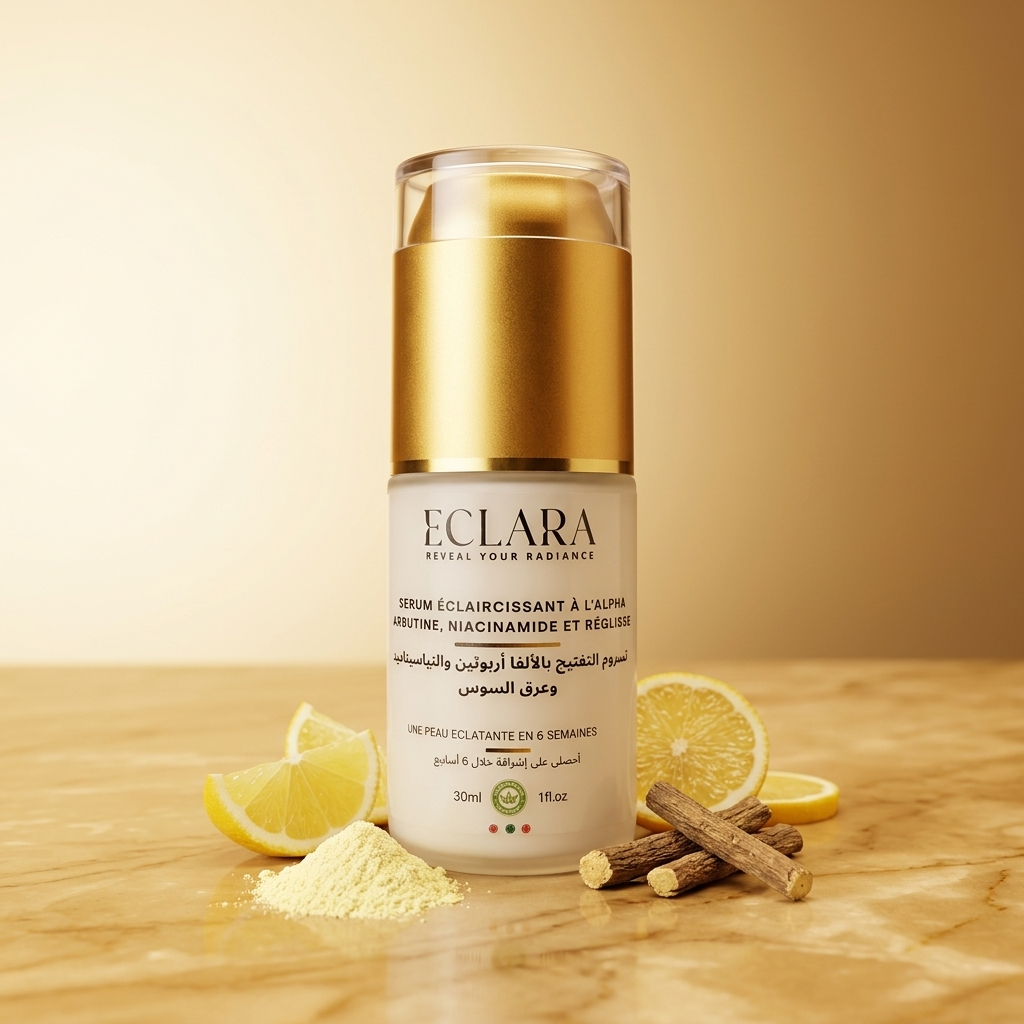
Niacinamide is one of the few universally compatible actives. It combines without issue with vitamin C, AHAs, retinol and hyaluronic acid. The only precaution: avoid mixing it directly in your palm with pure vitamin C (L-ascorbic acid) — applied separately, they are perfectly complementary. Suggested routine: vitamin C in the morning, niacinamide in the evening.
Which niacinamide concentration to choose
Clinical studies show significant results from 2% concentration. Formulas between 4% and 10% are most effective on spots and pores. Above 10%, side effect risk (slight redness) increases without notable gain. For sensitive skin, start at 2-4%. For tolerant skin with pronounced spots, 5-10% is the optimal range.
Before/after: what you can realistically expect
Weeks 2-3: skin is mattified, pores appear less visible. Weeks 4-6: complexion is more even, new spots fade faster. Months 2-3: existing spots begin to reduce, skin feels firmer. Months 4-6: visible results on deep spots and fine lines. Consistency is the key — niacinamide is not a quick fix, it's a long-game ingredient.
Source: National Institutes of Health — clinical study on niacinamide