
Melasma, called "kalf" by Moroccan women, is among the most common pigmentations in Morocco. It appears as symmetrical brown patches on the face — forehead, cheeks and upper lip — linked to hormonal shifts from pregnancy and oral contraception.
Why does melasma appear?
It occurs when skin cells overproduce melanin under the influence of estrogen and progesterone, amplified by sun exposure. That's why it's called the "pregnancy mask": it affects 50-70% of pregnancies. Morocco's sunny climate worsens its intensity.
Safe treatment during pregnancy
Safety first: some common actives are forbidden during pregnancy. Avoid retinol, hydroquinone and kojic acid. Safe, effective actives are:
- Vitamin C: inhibits melanin and brightens safely.
- Niacinamide: reduces melanin transfer.
- Azelaic acid: safe in pregnancy, lightens spots.
- SPF 50+ sunscreen: the most important active — without it, melasma returns.
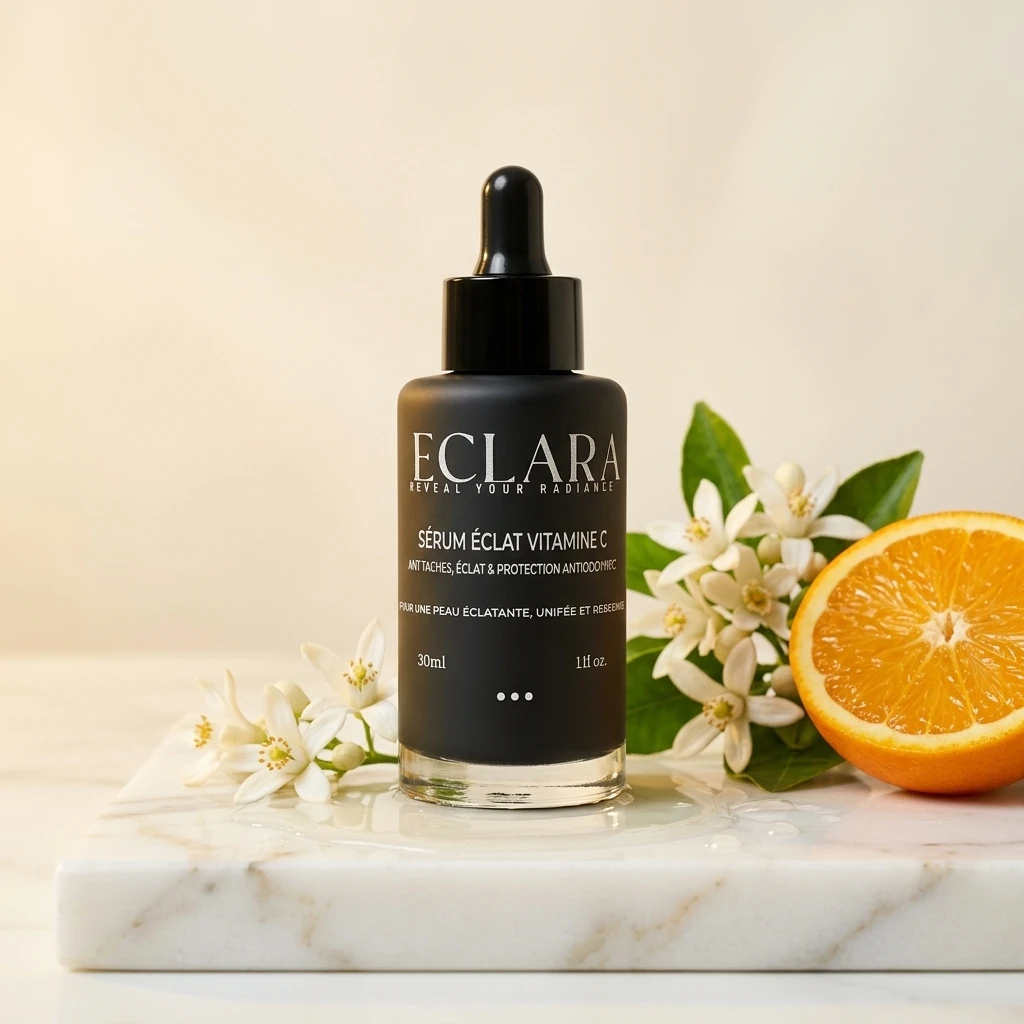
Our Eclara vitamin C serum helps lighten melasma safely, paired with our SPF 50+ sunscreen in the morning.
The recommended routine
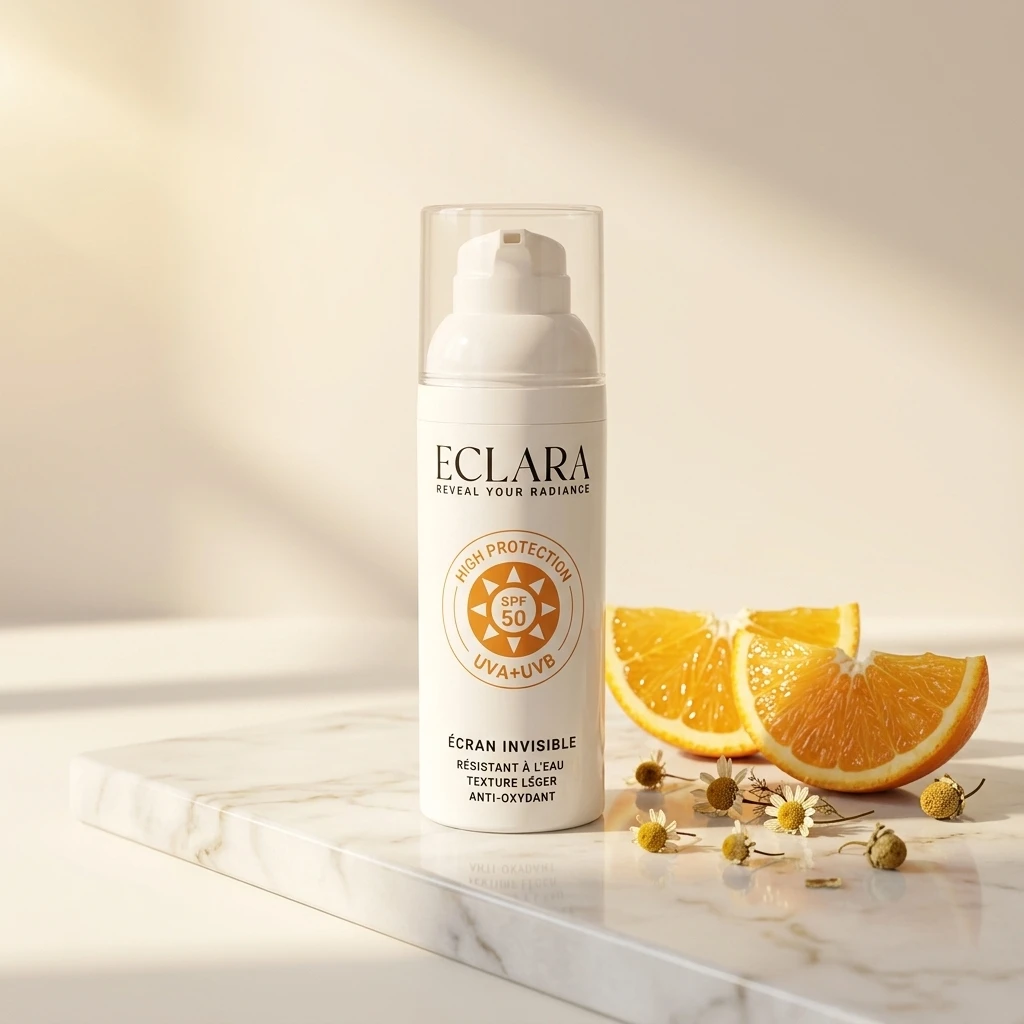
Morning: gentle cleanser → vitamin C → SPF 50+ sunscreen (reapply every 2h during exposure).
Evening: cleanse → niacinamide or azelaic acid → moisturizer. Daily consistency for at least 3 months makes a visible difference.
After pregnancy
Melasma often fades on its own after childbirth and the end of breastfeeding, but may persist for some women. After pregnancy you can add, under medical supervision, stronger actives like retinol. Daily sun protection remains the lifelong foundation in Morocco. Start safely with our Complete Anti-Spot Routine.