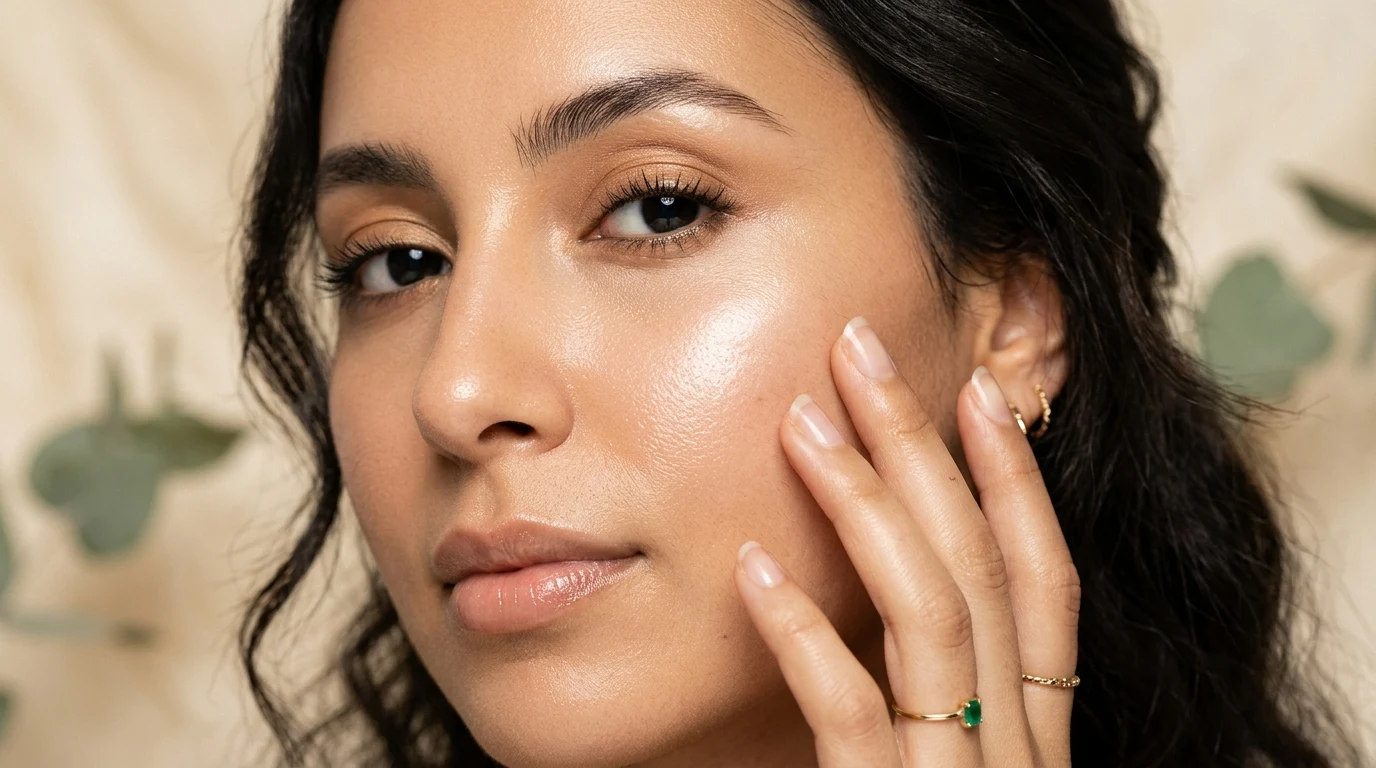
Dull skin, congested pores, uneven texture — these are problems that affect most women in Morocco, made worse by heat, urban pollution and sometimes overly occlusive products. Chemical exfoliation with AHAs, or fruit acids, is the most scientifically validated solution for a radiant complexion without damaging the skin barrier.
Why skin becomes dull in Morocco
Skin naturally renews itself every twenty-eight days or so, but this cycle slows with age and accelerates under stress, pollution and UV exposure. When dead cells accumulate on the surface, skin reflects less light and looks dull, thickened and lifeless. In Moroccan summers, heat also stimulates sebum production, which traps dead cells and clogs pores.
AHA versus physical scrubs: what the science says
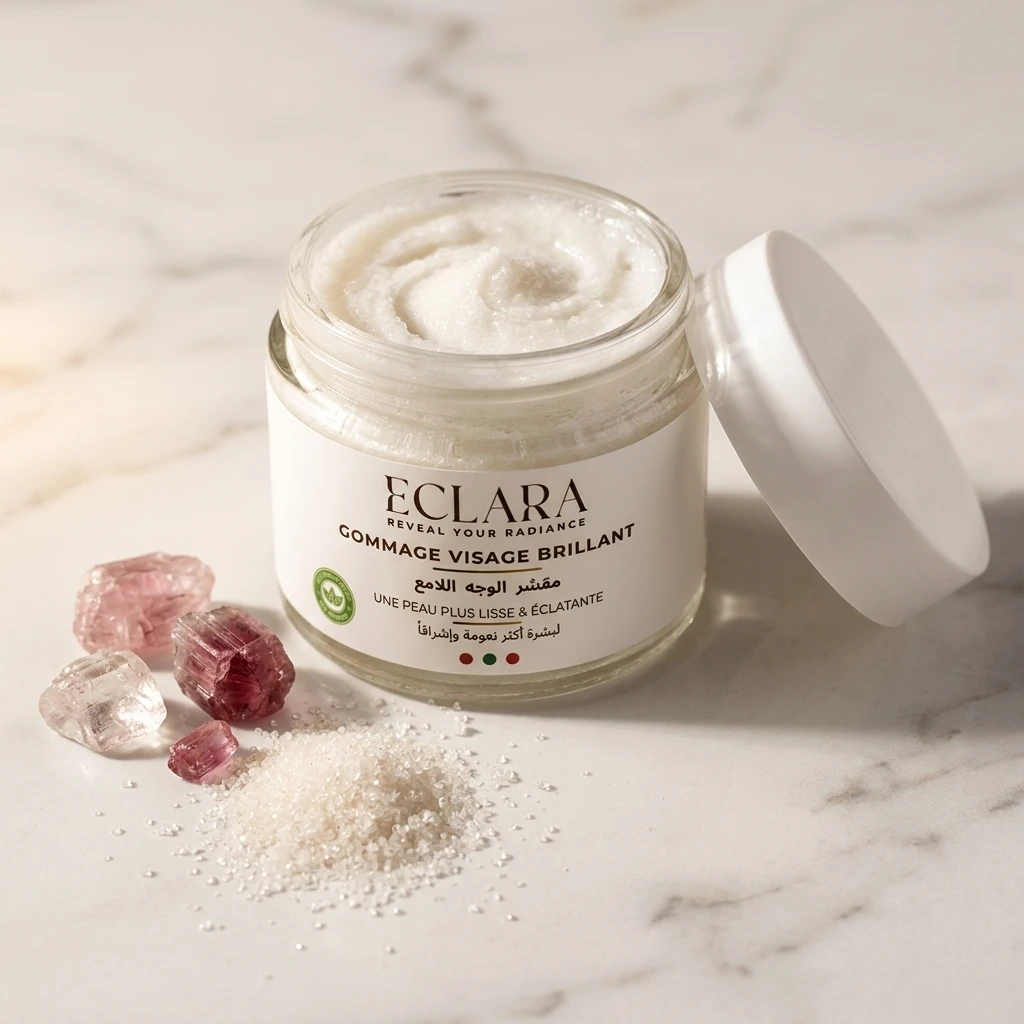
Physical scrubs — apricot grains, sugar, salt — create micro-tears that can worsen inflammation and cause scarring. AHAs such as glycolic acid, lactic acid and mandelic acid work chemically by dissolving the bonds between dead skin cells, with zero friction. The result is a more uniform, deeper exfoliation with no risk of mechanical damage. Eclara's Éclat Face Exfoliant combines natural AHAs in a gentle and effective formula tailored to Moroccan skin.
How to use an AHA exfoliant without irritating your skin
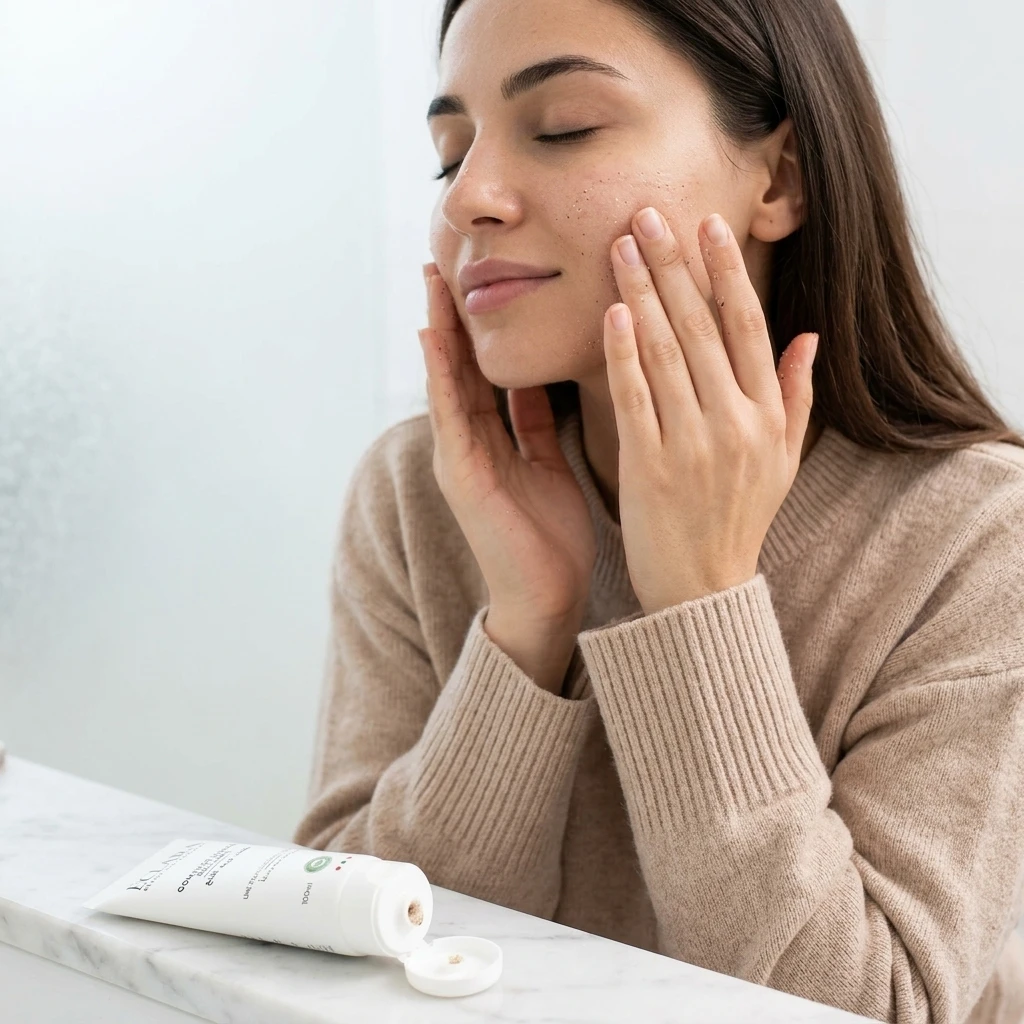
The golden rule: start slow. In the first week, apply once every four or five days. If your skin tolerates it well — no persistent redness or intense tingling — move to twice a week. Apply at night on clean, dry skin. Always follow with a moisturiser. The next morning, SPF50 is non-negotiable: AHAs increase UV sensitivity.
Ideal frequency by skin type
Oily or combination skin: two to three times per week. Normal skin: once or twice per week. Dry or sensitive skin: once a week at most, using lactic acid, the gentlest of the AHAs. In Moroccan summer, reduce frequency if your sun exposure is higher than usual.
Signs your skin needs exfoliation
Does your foundation sink into pores and look patchy? Does your moisturiser barely absorb? Is your complexion dull even after cleansing? Do you have small bumps under the skin? These are clear signals. Conversely, if your skin reddens, tightens or tingles easily, it may already be over-exfoliated. In that case, take a two-week break and reintroduce very gradually.
Source: National Institutes of Health — scientific review on AHA acids