
From the age of thirty, skin changes noticeably. Collagen production decreases by roughly one per cent a year from twenty-five onwards, but it is between twenty-eight and thirty-five that most women notice the first signs: a slight loss of firmness, expression lines that stay, a glow that is no longer effortless. The good news: with the right actives and consistency, this process can be significantly slowed.
What changes in skin after 30
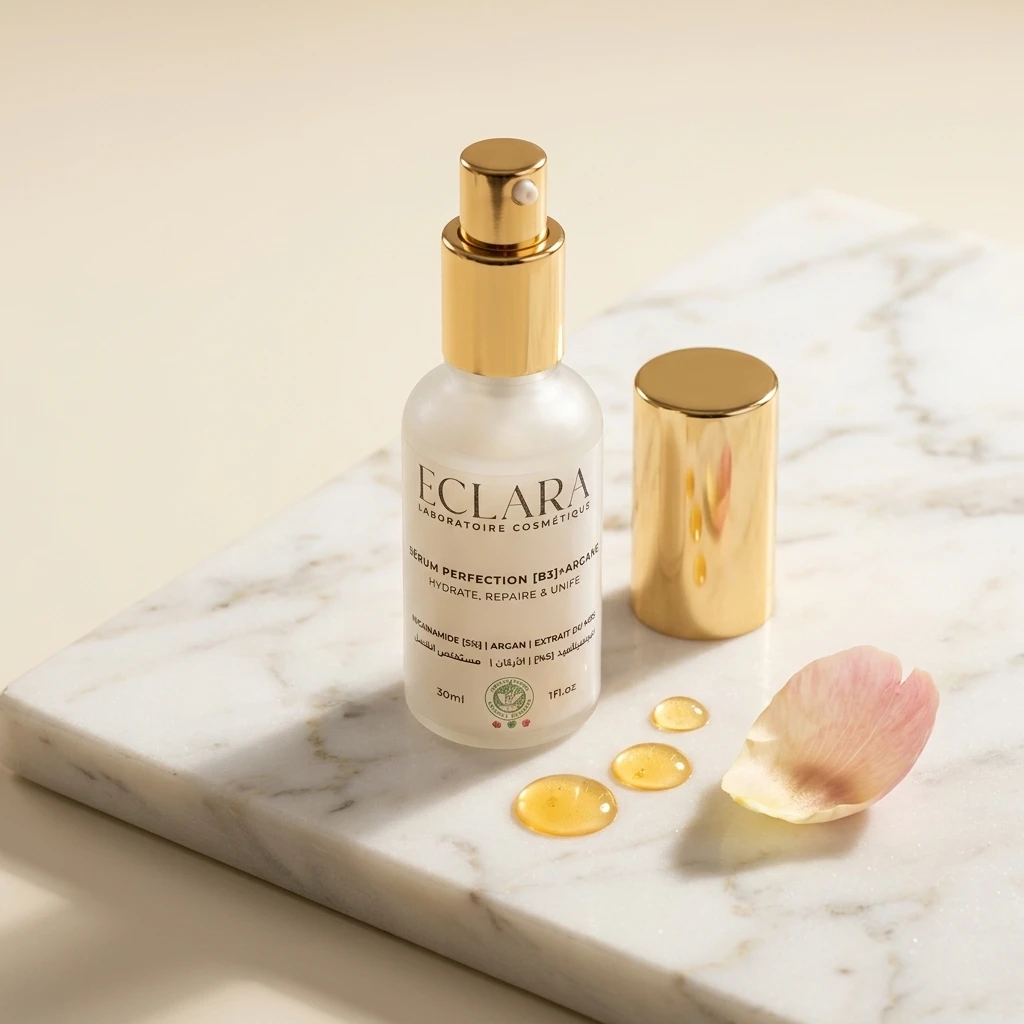
Four major transformations occur. Collagen and elastin production declines, leading to a loss of firmness. Cell renewal slows — from twenty-eight days to forty or fifty — and skin loses its natural radiance. The skin barrier becomes less efficient, making dehydration and sensitivity more common. Finally, years of accumulated UV damage begin to manifest as spots and fine lines. For Moroccan skin, this last point is particularly pronounced given the intense sun exposure and often insufficient photoprotection of earlier years.
Anti-ageing actives that science actually backs
Dermatological research identifies a handful of actives with solid proven efficacy. Retinol, a vitamin A derivative, is the most documented: it stimulates collagen production and accelerates cell renewal. Niacinamide strengthens the barrier, fades spots and supports collagen. Vitamin C is a powerful antioxidant, brightening agent and collagen precursor. Peptides signal fibroblasts to produce more collagen. SPF50, finally, is the only "anti-ageing" product with one hundred per cent proven wrinkle prevention. Eclara's Miracle Éclat Serum concentrates several of these synergistic actives and forms an ideal foundation for an anti-ageing routine. Pair it with SPF50 Sunscreen every morning — this is non-negotiable.
The anti-ageing routine adapted to the Moroccan climate
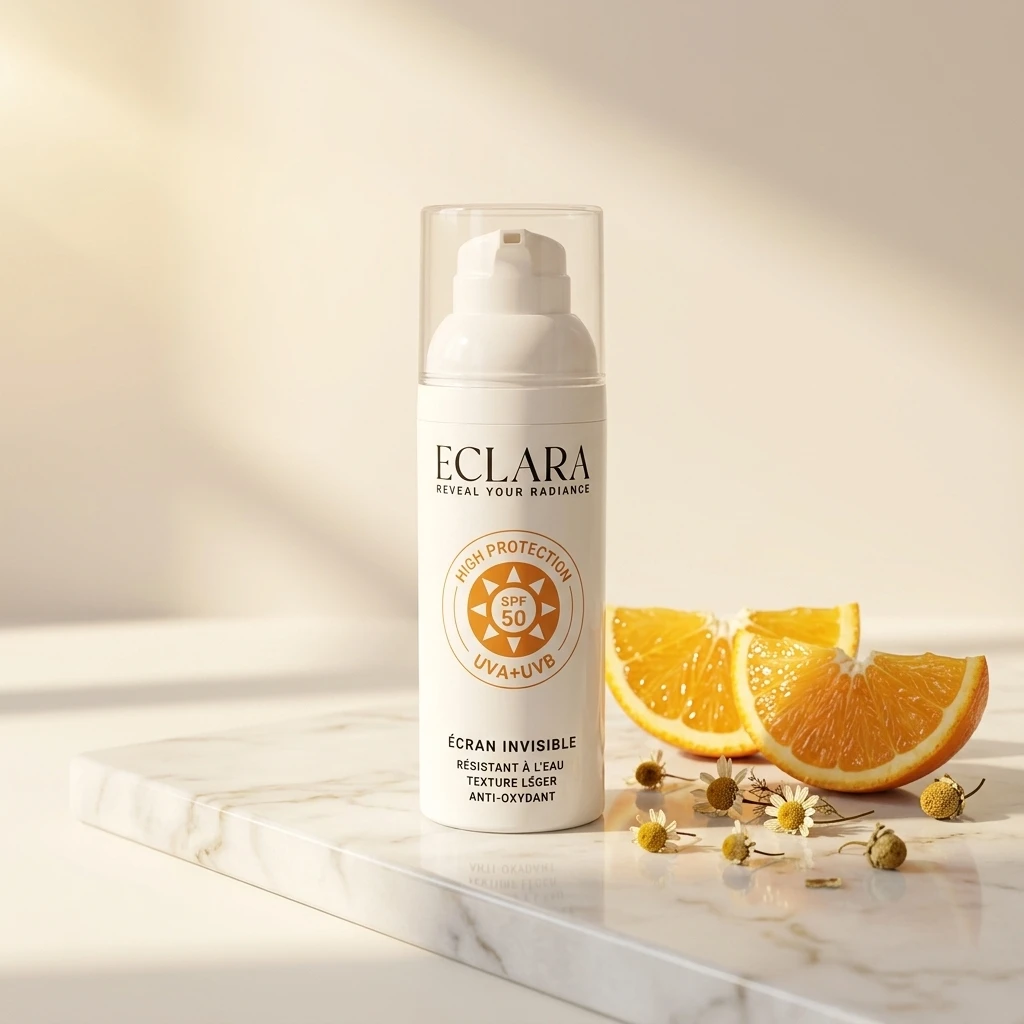
Morning: gentle cleanser, vitamin C serum to neutralise free radicals, niacinamide or anti-ageing serum, moisturiser, then SPF50. Evening: double cleanse if wearing makeup, concentrated serum such as the Miracle Serum, and two to three times a week retinol if your skin tolerates it, followed by a nourishing cream. In Moroccan summers, reduce retinol frequency as heat combined with UV increases the risk of irritation. In winter, focus more on hydration.
What your diet does to your skin after 30
Nutrition plays a genuine role. Antioxidants — vitamin C from Moroccan citrus, vitamin E from argan oil — neutralise the free radicals that accelerate ageing. Omega-3 fatty acids from Agadir sardines, walnuts and flaxseeds maintain cell membrane flexibility. Excess refined sugar promotes glycation of proteins, including collagen — one of the most documented mechanisms of skin ageing. And water: poorly hydrated skin makes lines more visible. Two litres a day is your most basic skincare.
Skin ageing myths you should leave behind
Myth one: expensive anti-ageing creams are necessarily better. False — it is the actives and their concentration that matter, not the price tag. Myth two: it is too late to start at thirty-five. False — skin responds to actives at any age. Myth three: collagen in a cream penetrates the skin. False — the molecule is too large to cross the epidermis. Actives that stimulate its production in situ are what work. Myth four: argan oil is enough as anti-ageing skincare. It is excellent for hydration and barrier support, but it does not contain the clinically proven actives that fight ageing.
Source: National Institutes of Health — retinol anti-ageing study